Category - Vizergy Knowledge Base

Traffic metrics also tend to dominate marketing conversations because they're easy to measure. Visits, impressions, clicks, and rankings are readily available in every reporting platform. Bookings are more complicated. Travelers compare options, check rates, read reviews, visit multiple sites, and often return several times before making a decision. As a result, it's easy to focus on the top of the funnel while overlooking what happens further down the booking journey.
Read More About more traffic won't fix your booking problem

A hotel can rank well for important search terms and still be absent from the recommendations travelers are actually seeing. At the same time, a competing property may appear consistently because AI has a clearer understanding of what that hotel offers, who it's best suited for, and when it should be recommended. The challenge isn't always visibility in the traditional sense. Increasingly, it's visibility in AI-driven conversations.
Read More About the new competitive gap: why AI mentions matter more than rankings
One of the biggest misconceptions about AI search is that it's simply the next evolution of SEO.
That's understandable. for years, hotel marketers have been trained to think about visibility in terms of rankings. If someone searched for hotels in your destination, you wanted your property to appear as high on the page as possible. Visibility meant being found, and SEO was the discipline that helped make that happen.
Read More About AI search visibility isn't SEO 2.0. it's recommendation readiness.
If you've spent any time reading about search marketing lately, you've probably noticed a growing list of acronyms. SEO, AEO, GEO, AISO, LLMO—the industry seems to invent a new one every few months.
The truth is that while each term emphasizes a slightly different aspect of search, they're all working toward the same goal: helping people discover trustworthy information when they need it.
Here's a simple breakdown.
Read More About SEO, AEO, GEO, AISO… what's the difference?
that's where many AI conversations go off track. the best uses of AI aren't the ones that create entirely new processes. they're the ones that fit naturally into the work you're already doing and make it easier, faster, or more effective.
the goal of AI should not be to add work. it should be to remove it.
Read More About AI should remove work, not add work: a practical hotel marketing lens

Today, guests aren’t just browsing websites or scrolling through search results. They’re asking AI platforms and search‑assisted tools where to stay. And those platforms don’t experience your website the way a human does. If AI platforms and search engines can’t find your website — or can’t understand it — your story never gets told.
Read More About great storytelling doesn’t matter if AI can’t find your hotel

Search behavior is changing. AI-powered discovery is influencing how travelers research and choose hotels. guest expectations are higher, across every touchpoint, from the first search to the booking experience.
Simply checking boxes is no longer enough.
Read More About when an agency isn’t enough anymore
In today’s digital landscape, “good enough” websites rarely fail in obvious ways. Instead, they underperform quietly, costing hotels revenue without triggering clear red flags. Because nothing is technically wrong, it is easy to assume nothing needs to change.
Read More About why “good enough” hotel websites are quietly costing you revenue

Artificial intelligence is reshaping how travelers discover hotels. Search is becoming conversational. Answers are replacing links. Recommendations are increasingly generated before a guest ever visits a website.
It is a meaningful shift, and one the hospitality industry cannot ignore. But as AI becomes more embedded in the discovery process, a misconception is starting to take hold: that visibility alone is enough.
Read More About what AI search can’t fix (and why strategy still matters)
The good news: most hotel ADA lawsuits stem from a small set of well-known, fixable website issues. Below are the top five ADA website accessibility failures most often cited in lawsuits against hotels, and what hoteliers should understand about each.
Read More About top 5 ada website accessibility issues triggering hotel lawsuits
To help properties understand and improve how they appear in this emerging discovery channel, Vizergy has launched the AI Search Optimization Dashboard, an integrated feature within the Vizergy Marketing System (VMS).
Read More About introducing Vizergy’s new ai search optimization dashboard: see how ai platforms view your hotel
The most effective hotel digital strategies aren’t built by stacking more tools. They’re built by simplifying management and aligning systems around a single, connected approach.
Read More About simplifying hotel digital strategy: why one connected approach matters more than ever
Generative AI is reshaping how travelers search for hotels—and how hotels need to show up online. With platforms like Google SGE, Bing Copilot, and ChatGPT, search is no longer just a list of links. It’s a conversation.
Read More About from keywords to conversations: rethinking website content for generative engines
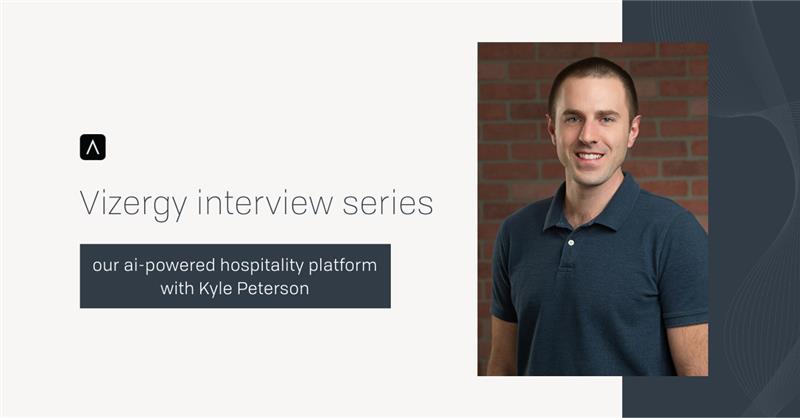
In this episode of The Vizergy Interview Series, Vice President of IT Kyle Peterson breaks down how AI is powering the Vizergy Marketing System and other hospitality platforms and what hoteliers should expect from AI today and tomorrow.
Read More About the Vizergy interview series: our ai-powered hospitality platform with Kyle Peterson

Behind every successful Vizergy project is a team aligned around one goal: helping hotels achieve measurable, long-term digital performance. In this episode of The Vizergy Interview Series, Account Executive Michael Olberding shares his perspective on communication, collaboration, and how early alignment between teams creates stronger outcomes for hospitality brands.
Read More About the Vizergy interview series: from project to measurable results with Michael Olberding

